
Ice Dams Are Causing Real Damage This Winter — Here’s What Hudson Valley Homeowners Can Do
This winter has been a tough one across the Hudson Valley. Prolonged cold, heavy snow, and dramatic temperature swings have created the perfect conditions for a problem many homeowners are dealing with right now: ice dams.
If you’ve noticed thick ice building up along your gutters or the lower edges of your roof—or worse, water showing up inside your home—you’re not alone. The good news is that ice dam damage is understandable, manageable, and preventable with the right approach.
Let’s break down what’s happening, what to do if you’re dealing with it now, and how to reduce the chances of it happening again in the future.
What’s Actually Causing the Ice Damage?
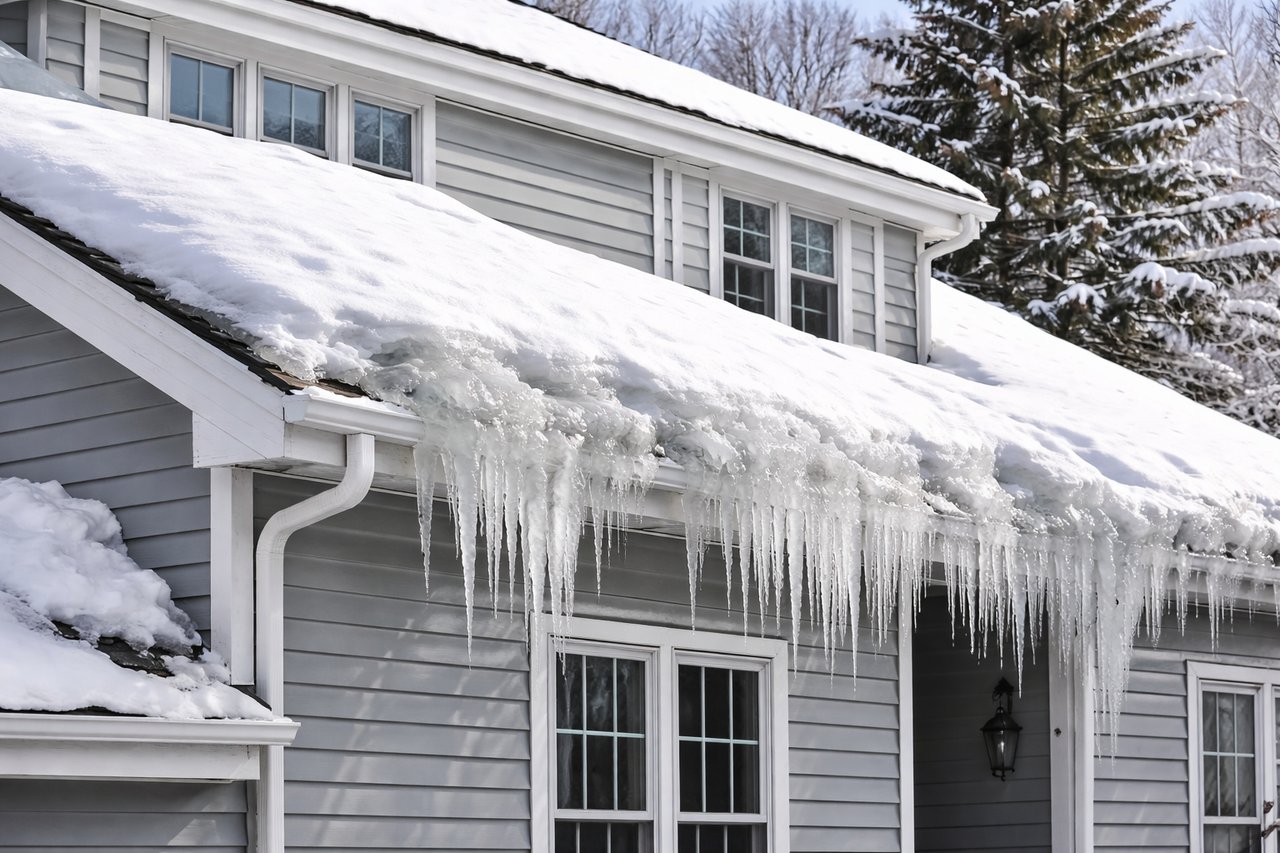
Ice dams form when snow on the roof melts during the day, then refreezes at night. Over time, that ice builds up along the roof edge and inside gutters.
Here’s why it’s been especially bad this year:
-
Snow has stayed on roofs longer than usual
-
Daytime temperatures rise just enough to melt snow
-
Nighttime temperatures drop sharply, refreezing that meltwater
-
Gutters and roof edges stay cold, allowing ice to accumulate
As ice builds, it prevents water from draining properly. That water can back up under shingles and find its way into the home—leading to leaks, ceiling stains, damaged insulation, and even mold if left unchecked.
If You’re Dealing With Ice Damage Right Now
If you suspect an ice dam or active leak, here are a few immediate, homeowner-safe steps:
1. Look for the warning signs
-
Icicles forming thickly along gutters
-
Ice buildup at the roof edge
-
Water stains on ceilings or walls
-
Dripping or damp insulation in the attic
2. Use roof-safe ice melt
There are calcium chloride-based ice melt products designed specifically for roofs. These often come in tablet or pellet form and can be placed in a fabric sock or pantyhose and laid vertically across the ice dam to help create a drainage channel.
⚠️ Avoid rock salt—it can damage shingles, gutters, and landscaping.
3. Clear snow carefully
If it’s safe to do so, use a roof rake from the ground to remove excess snow, especially near the roof edge. This reduces melting and refreezing cycles.
4. Call a professional if needed
Steam removal services are often the safest way to remove severe ice dams without damaging the roof.
How to Prevent Ice Dams in the Future
Once winter breaks and repairs are made, prevention becomes the focus. These are some of the most effective long-term solutions for Hudson Valley homes:
Snow Raking After Heavy Storms
Regularly removing snow—especially after big storms—can dramatically reduce ice dam formation. It’s simple, affordable, and effective.
Heated Gutters or Heat Cables
Heated gutter systems or roof heat cables help keep water flowing instead of refreezing. They’re especially useful for:
-
Homes with complex rooflines
-
North-facing roofs
-
Areas that consistently collect ice
Improve Attic Insulation and Ventilation
Many ice dams start from heat escaping into the attic. Proper insulation keeps warm air inside the home, while good ventilation keeps the roof cold and consistent.
This is one of the most overlooked—but impactful—solutions.
Ice & Water Shield When Replacing a Roof
If a roof replacement is in your future, ask about installing an ice and water shield membrane along the eaves. This extra layer helps prevent water intrusion even if ice dams form.
It’s a small upgrade that can make a big difference in cold-climate regions like ours.
Routine Gutter Maintenance
Clear, well-functioning gutters allow meltwater to drain properly before it has a chance to freeze and back up.
A Reassuring Note for Homeowners
If you’re dealing with ice damage this winter, it doesn’t mean your home has a major flaw—or that you did something wrong. This season has been unusually demanding, even for well-maintained properties.
What matters most is understanding the issue, addressing any immediate damage, and planning smart preventative steps moving forward.
Winter may not be done with us yet—but warmer days are ahead. And with the right preparation, your home can be ready for whatever the next season brings.