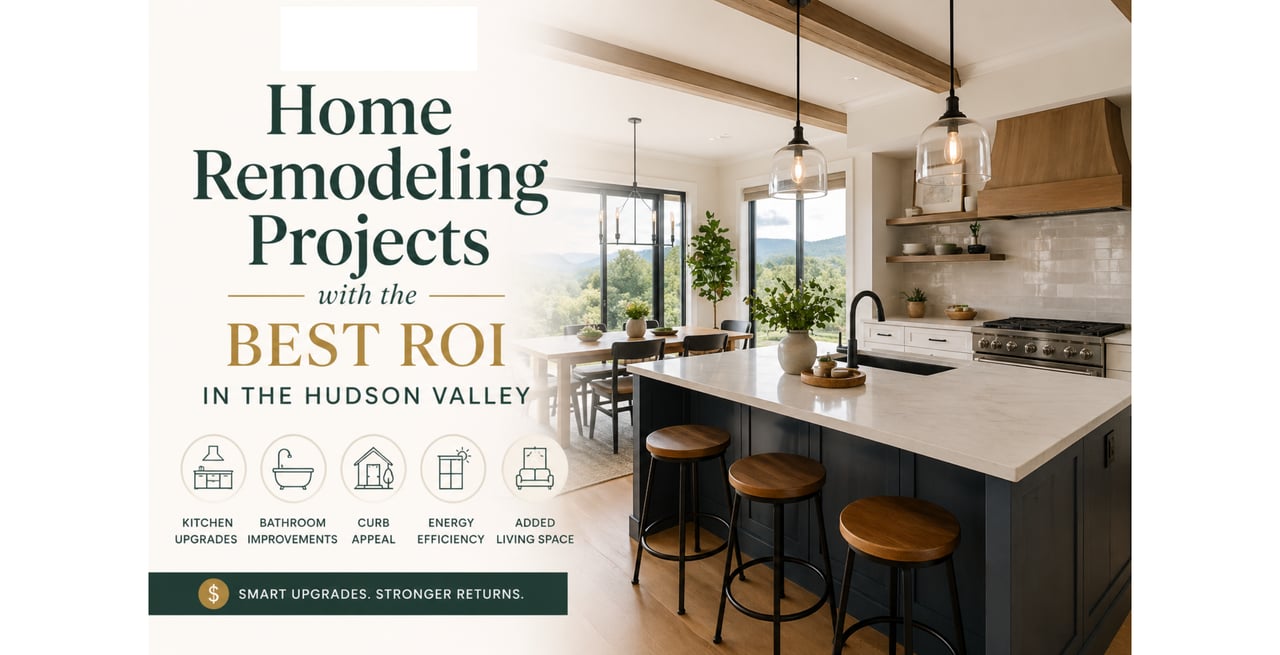
Best Home Remodeling Projects for ROI in the Hudson Valley
What ROI Actually Means Here
ROI in home remodeling isn't just about getting your money back, it's about spending it in ways that resonate with the buyers who are actively shopping your market. In the Hudson Valley, that's a specific kind of buyer, and that specificity matters more than national averages.
The basic math: if you spend $20,000 on a project and it adds $15,000 to your sale price, that's 75% ROI. Solid. But the real question is which projects move that needle here, and which ones look great in your home but leave buyers cold.
A few local factors shape this more than anything else:
Your buyer is probably fleeing a city. Since 2020, the Hudson Valley has pulled in a steady wave of New Yorkers trading apartments for actual space. They have money, they have opinions, and they want a home that feels genuinely livable, not a renovation project waiting to happen.
The housing stock is old. Lots of homes here have good stories and bad mechanicals. Buyers know it. Anything that addresses hidden concerns - updated electrical, new windows, better insulation earns trust, and trust translates to offers.
Seasons are real. Four full ones, every year. That makes energy efficiency and outdoor living unusually valuable. Both categories punch above their weight in this region.
Neighborhood ceilings exist. A $140,000 kitchen in a $350,000 neighborhood doesn't pencil out. Know your block before you commit to anything.
Why the Hudson Valley Market Plays by Its Own Rules
Buyers here aren't just buying a house, they want the whole thing: the scenery, the slower pace, the weekend-away feeling every single day. That shapes exactly what they'll pay more for.
Move-in ready matters enormously. Buyers relocating from cities aren't looking for a project. They want to unpack and start living. If your home looks updated and clean, you're already ahead of most of the competition.
Multi-use spaces are increasingly expected. A room that works as both a guest room and a home office, a basement that doubles as a gym and rec room, flexibility reads as value to today's buyer.
One thing worth clarifying on aesthetics: while the exposed-beam farmhouse look gets a lot of attention, the reality is that most homes in the Hudson Valley are postwar builds — ranches, colonials, and splits from the 50s through the 80s, plus a healthy share of 2000s construction. The design goal isn't rustic charm - it's clean, updated, and welcoming without feeling generic. Buyers respond to homes that feel thoughtfully maintained, whatever the era. A 1965 ranch with updated finishes and good flow can be just as compelling as a renovated farmhouse, sometimes more so because there's less competition for that buyer.
Kitchen: Still the Best Bet
Minor vs. Major Remodels
Here's something the industry averages don't tell you: ROI on a kitchen remodel depends heavily on where you're starting from.
The standard figures, minor remodels recouping 70-80%, major ones around 50-60%, assume a kitchen that's already in decent shape. But that's not always the case. If you're working with worn Formica, cabinets that have seen better decades, and appliances that look like they came with the house in 1987, the math changes completely.
A $15,000 investment in that kitchen — new countertops, refaced cabinets, fresh appliances, a good cleaning and floor polish, can realistically show up as $30,000 to $50,000 in sale price. That's not 75% ROI; that's the baseline effect of removing a major buyer objection. You're not just upgrading a kitchen, you're turning a liability into an asset. The return in that scenario can easily hit 200-300%, sometimes more.
The takeaway: don't apply national averages to a tired kitchen. The worse the starting point, the better the return on a smart, targeted refresh.
On the flip side, a full gut renovation in a kitchen that was already functional? That's where ROI drops off. Most buyers won't pay dollar-for-dollar for custom cabinetry or high-end appliances that suit someone else's taste. Spend smart, not big.
Features Worth Spending On
Cabinets: Reface or repaint rather than replace. Neutral tones, soft white, warm gray, sage with updated hardware do a lot of heavy lifting for relatively little money.
Countertops: Quartz has become the default for good reason. Durable, low-maintenance, looks expensive without being fussy. It appeals to a wide range of buyers.
Appliances: Match them, make them energy-efficient, and stop there. A cohesive set of stainless appliances outperforms a mismatched collection of premium brands.
Lighting: Layered lighting, pendants, under-cabinet strips, recessed fixtures makes kitchens feel larger and warmer. Don't skip it.
Layout: Even small improvements to workflow (the triangle between sink, fridge, and stove) get noticed emotionally, even when buyers can't articulate why.
Bathrooms: Small Rooms, Solid Returns
Starting Point Changes Everything
You'll often see bathroom remodels quoted at 60-70% ROI, and in many cases that's accurate. But like kitchens, that number assumes you're improving something that's already serviceable.
A bathroom with rust stains, visible mold, cracked tile, and a vanity that belongs in a time capsule isn't a "midrange remodel" situation — it's a liability. Buyers will either walk away or use it to negotiate your price down significantly. Fix it properly for $10,000-$15,000 and you may recover two or three times that in sale price, simply because you've removed something that was actively costing you money.
The baseline: new vanity, updated toilet, refreshed tile, a better shower. No structural changes, no moving walls — just making the space feel like it was touched in this decade. That's what "move-in ready" actually means to buyers.
In the Hudson Valley, a little spa-influenced thinking goes a long way like rainfall showerheads, calming palettes, natural materials. These touches don't have to be expensive to feel elevated.
Luxury vs. Practical
Steam showers and soaking tubs photograph beautifully and appeal to some buyers. They don't appeal to everyone, and they can actively turn off families who need a functional tub.
Practical upgrades like smart storage, double sinks, good ventilation, durable finishes have near-universal appeal. If you want to add a luxury touch, a frameless glass shower enclosure or a heated towel bar delivers that premium feel without narrowing your buyer pool.
The test: would this feature make the house easier to sell, or just more fun to own? Both answers are valid just know which one you're optimizing for.
Curb Appeal: The First 10 Seconds
Exterior Projects That Deliver
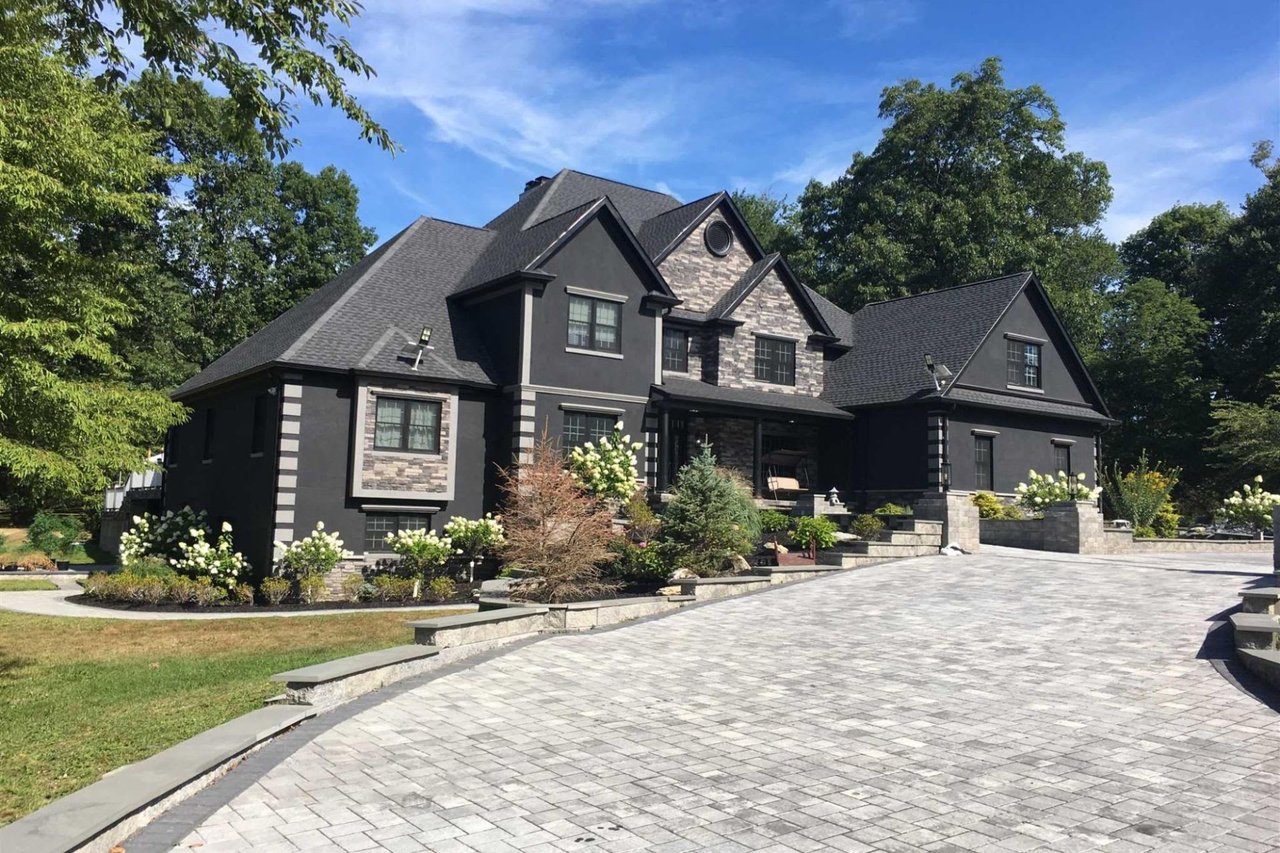
Buyers make judgments before they get out of the car. Everything they feel walking toward the front door primes how they experience everything inside.
Here's the same principle that applies to kitchens and bathrooms: the ROI figures you see cited 65-75% for a new door, 70% for siding assume a home that's already presentable. When the exterior is rough, peeling, or just visually tired, you're not just improving curb appeal. You're removing a deal-killer. Buyers who don't make it to the front door can't make an offer.
A new front door returns upward of 70% in normal circumstances, but in a situation where the current door looks neglected, that same investment can make the difference between a showing and a drive-by. New siding, especially fiber cement, improves both appearance and weatherproofing which is relevant in a climate that tests houses every winter. A newer roof doesn't wow anyone visually, but it removes a major objection before it's even raised.
The bottom line on curb appeal ROI: the numbers cited in industry reports are a floor, not a ceiling. The worse the starting condition, the higher the real return.
Landscaping and Outdoor Living
Nature is part of what buyers are paying for here. Your yard should reflect that.
Clean, well-maintained landscaping like native plants, trimmed edges, a lawn that doesn't look abandoned can add up to 10% to perceived value. It doesn't need to be elaborate. It needs to look intentional.
Decks and patios do something numbers can't fully capture: they help buyers picture themselves living there. A fire pit, some outdoor seating, a pergola aren't luxuries, they're imagination fuel. Returns run 65-75% of cost, but the emotional lift they create during showings is hard to overstate.
Landscape lighting is a cheap upgrade that makes a meaningful difference, especially during evening showings.
Energy Efficiency: Practical and Increasingly Expected
Windows, Insulation, HVAC
Cold winters. Humid summers. Buyers in the Hudson Valley aren't abstract about energy costs as they've been paying them.
New energy-efficient windows recoup roughly 65-75% of cost, but the perceived value often exceeds the number. Good windows mean better insulation, less noise, more natural light. Buyers feel the difference.
Insulation is invisible but pays back more than almost anything else. Upgraded attic or wall insulation can deliver over 100% ROI when energy savings are factored in over time. It doesn't show during a tour, but lower utility bills are a selling point that shows up in your disclosure documents.
A modern HVAC system, paired with a smart thermostat, communicates that this house runs well. That's exactly what move-in-ready buyers need to hear.
Solar Panels
The Hudson Valley's eco-conscious buyer base makes solar more valuable here than in many other markets. Studies suggest solar adds 4-6% to home value, plus the ongoing energy savings make it a strong negotiating point.
Two caveats: owned systems add value; leased systems complicate sales. And aesthetics matter... low-profile panels that integrate cleanly with the roofline perform better than bulky retrofits. Federal and state incentives can meaningfully reduce upfront costs, which changes the ROI math considerably.
Basement and Attic Conversions
More Square Footage — But Do It Right
Finished basements return roughly 70-75% of cost in this market, but the bigger selling point is versatility. A basement can be a rec room, home gym, guest suite, or home office. Buyers see possibility, and possibility is valuable.
One thing that often gets overlooked: the space needs to be legalized with the town to count. That typically means permitted work, proper ceiling height, and, critically, a means of egress. It's not just a legal requirement; it's a safety one. And there's a practical upside too: permitted square footage shows up in MLS searches. Buyers filtering by bedroom count or total square footage will find your listing when they wouldn't have before. That increased visibility alone can justify the investment.
Attic conversions work similarly, adding a bedroom, studio, or flex space without changing the home's footprint. In a market where price per square foot matters, this is one of the more efficient ways to increase value.
The quality bar matters. Dark, low-ceilinged spaces with bad lighting and poor ventilation don't add value, they raise questions. If you're going to do it, do it right.
Rental Income and Multigenerational Living
Hudson Valley's dual appeal, primary residence and weekend getaway market, makes rental income a realistic ROI multiplier. A finished basement with a private entrance, bathroom, and small kitchenette can function as a short-term rental or long-term unit, and buyers interested in offsetting their mortgage will notice immediately.
But there's another angle that's becoming just as relevant: multigenerational living. With home prices where they are, more families are actively looking for properties that can accommodate aging parents or adult children under the same roof, with some degree of separation and independence. A lower level with its own entrance, a bathroom, and a small living area checks that box. It's not just a rental play; it's a family solution, and that appeals to a broad and motivated segment of buyers right now.
Check local zoning before building toward either use, regulations vary by municipality. But when it's viable, it's one of the strongest value stories you can tell.
Home Office Additions
This one doesn't have a clean percentage attached to it, but the impact is real. Buyers who relocated from cities to work remotely are not going back. A dedicated, well-designed office space, good light, built-in storage, some acoustic separation from the rest of the house, is a meaningful differentiator.
It doesn't require a full addition. A converted bedroom or finished corner of a larger room can do the job. What matters is that the space reads as intentional, not improvised.
Homes with well-considered office spaces tend to attract more serious buyers and move faster. In a competitive market, that speed has dollar value.
Decks, Patios, and Outdoor Space
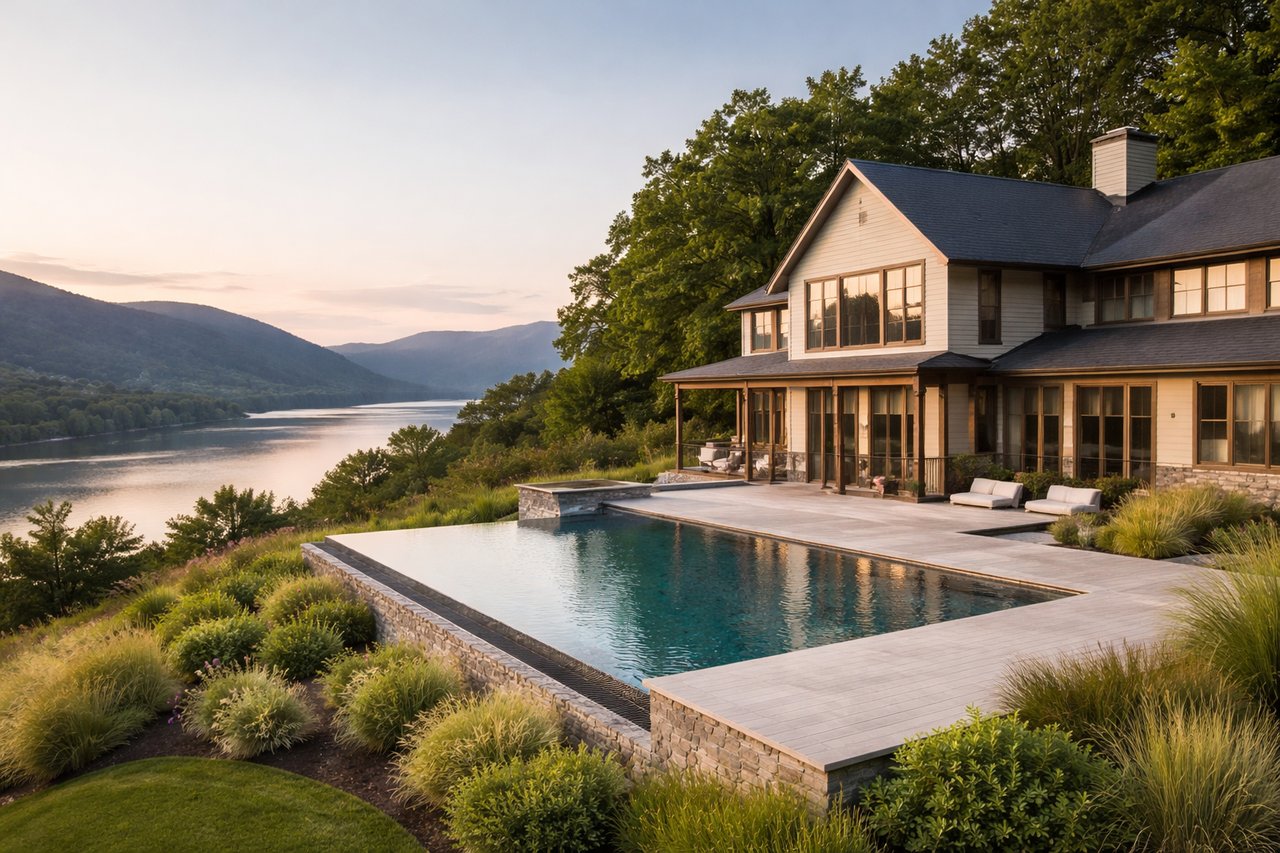
Outdoor living isn't a seasonal bonus in the Hudson Valley, it's central to the appeal. Buyers moving here from cities are partly paying for the ability to sit outside without hearing sirens.
A wood deck recoups 65-75% of cost. Composite costs more upfront but sells the low-maintenance angle, which matters to buyers who don't want another weekend project. A patio is often less expensive and delivers comparable lifestyle value.
Fire pits, pergolas, outdoor dining areas, these features help buyers emotionally commit to a home. They imagine the dinner parties, the quiet mornings, the kids running around. That imagination drives offers.
Keep it cohesive. The outdoor space should feel like it belongs with the house, not like it was added as an afterthought.
The Bottom Line
The projects that consistently deliver in the Hudson Valley share a few traits: they appeal to a wide range of buyers, they address real concerns like condition, efficiency, usability which reflects the specific lifestyle this market sells.
One theme runs through almost everything on this list: starting condition matters as much as the upgrade itself. A kitchen rescue, a bathroom that stops scaring buyers, an exterior that earns a second look — these aren't just improvements, they're liability removals, and the return on that is often far higher than industry averages suggest.
Kitchen and bathroom updates are reliable because they matter to everyone. Curb appeal sets the emotional tone. Energy efficiency addresses practical anxieties. Outdoor spaces and bonus square footage tap into why people choose this region in the first place.
Spend strategically, avoid over-customizing, and keep your neighborhood's price ceiling in mind. When those pieces align, your renovation doesn't just improve the house — it actually pays you back.